
Forever Wars are like Democracy
They may be terrible, but they're the best kind of war there is

Americans capable of remembering 2021 and earlier will remember the wars in Iraq and Afghanistan and the characterization of these conflicts as “forever wars.”123
War is bad, yes, yet if the United States engages in war we should be in it to win it. Forever wars are the only way to ensure a lasting victory and ensuing peace. I feel the same way about forever wars as Winston Churchill felt about democracy;4 which is to say that I despise forever wars but still acknowledge them as the best option.
Many forms of Government have been tried, and will be tried in this world of sin and woe. No one pretends that democracy is perfect or all-wise. Indeed it has been said that democracy is the worst form of Government except for all those other forms that have been tried…
- Winston Churchill
By “forever war” I mean that American troops have been permanently deployed to areas of conflict. This means the Civil War or World War Two are forever wars because, to this day, the American military maintains a presence in what used to be contested territory.
Every war that ended in an enduring peace has been a forever war. Every war the United States has lost was because the American public lost the will to engage in a forever war.
The wars we won
Every war the United States has fought that resulting in an enduring peace was a forever war:
The American Revolution
This should be the easiest one to believe. The United States government still maintains a military presence in the land that we call the United States (shocking revelation, I know). American troops still occupy the land that we fought to gain during the Revolution.5
The Civil War
Just like the Revolutionary War where American soldiers remained in the former Thirteen Colonies, American troops remain to this day stationed in the former Confederacy.6
World War Two
To this day, we have troops stationed in the former Axis powers (Germany, Japan, & Italy).
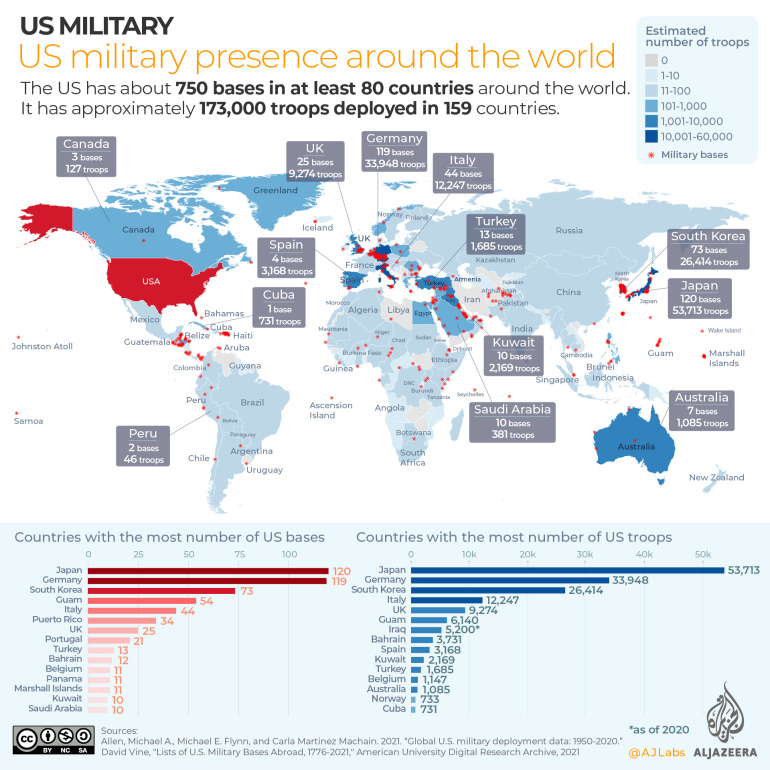
The United States maintains a military presence in the former Axis powers, among other places.
The Korean War7
After mounting a successful defense of the Republic of Korea, the United States maintains a large military presence in the Republic on through today.
The Intervention in Yugoslavia8
Following the NATO intervention in Yugoslavia during Bill Clinton’s tenure, Camp Bondsteel Army Base was established in Kosovo and remains open to this day.9
Intervention in Iraq in 201410
Despite the annihilation of the Islamic State (popularly known as ISIS), the United States still maintains military bases in Iraq.11 Since the end of the American led intervention, Iraq has been relatively stable.
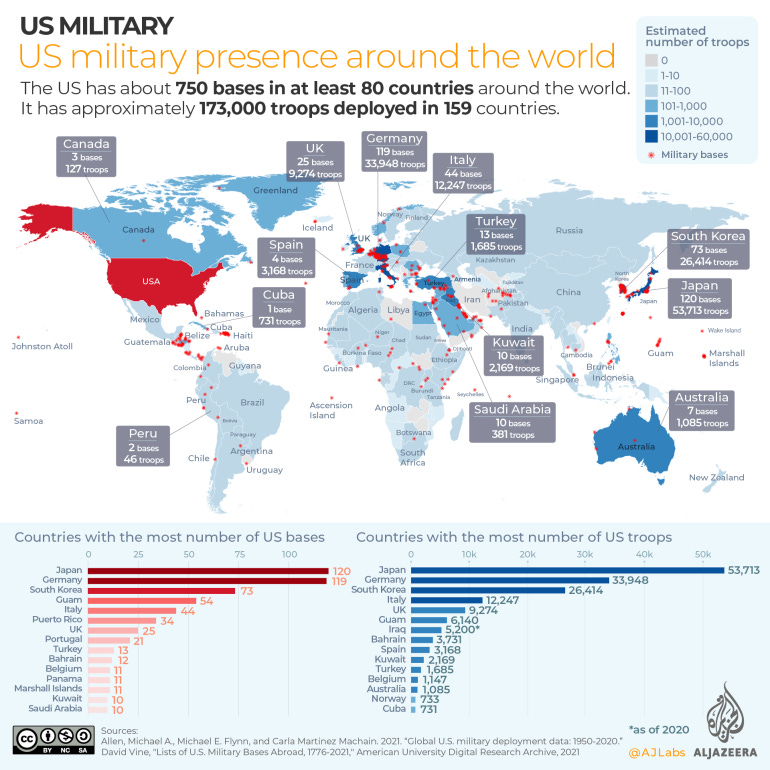
In all of these cases, permanent American military presence has ensured a lasting peace.
Sometimes America does win a war without establishing a permanent troop presence; meaning sometimes a war is won that does not last forever. Unfortunately, these supposed victories fail to ensure a lasting peace:
World War One
After WWI, America mostly returned to its isolationist ways and brought all of her troops home. Lack of American presence in Europe opened the door for destabilization and allowed someone like Hitler to take power by promising stability.
In hindsight, American politicians and diplomats knew that leaving Europe after WWI was a mistake, which is why they pursued the exact opposite policy in the aftermath of WWII.
The Gulf War12
After the international intervention led by George H. W. Bush to stop Saddam Hussein’s Iraq from conquering Kuwait succeeded, American forces left Iraq. This allowed Saddam Hussein to continue running Iraq the way he saw fit, and directly led to #3.
The Iraq War (2003-2011)13
America invaded Iraq in 2003, nominally to stop the proliferation of weapons of mass destruction. Regardless of the reasoning for invading Iraq, the United States obliterated any organized resistance and then left in 2011. America’s decision to leave Iraq in 2011, just like her decision to leave Europe in 1918, destabilized the region and allowed ISIS to appear as a legitimate government.
Next time America went into Iraq, she did stay forever to ensure a lasting peace. The fact that there was a next time is proof that the Iraq War did not secure an enduring peace.
The wars we lost
Every war the United States lost was because the American public lost the will to fight before the job was finished. This is much easier to prove than my other claim because there are hardly any wars that the United States lost outright.
The Vietnam War14
This is the quintessential example of Americans losing the will to fight. In the aftermath of the American withdrawal from South Vietnam, more conflict and death took place before Communist North Vietnam finally prevailed. American apathy or withdrawl thus failed to secure even a temporary peace.
The War in Afghanistan15
Afghanistan was nearly identical to Vietnam. While American forces were present, American goals were achieved, but after the Americans withdrew the Taliban violently reasserted itself over the entire country.16
Afghanistan had become much like Korea after the Korean War. There were still lingering hostilities, but the conflict was essentially over (as evidenced by the zero American combat deaths prior to American withdrawl)17 and peace was maintained by American military might.
That one war that was a tie
The War of 1812 still fits this paradigm. Although America neither won nor lost this war, the War of 1812 was not a forever war and it failed to secure lasting peace.
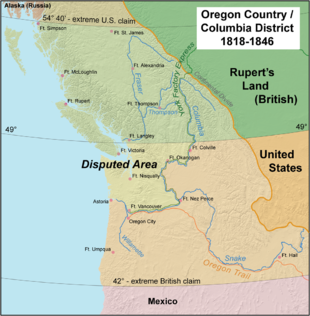
While no war since 1812 has erupted between the United States and Britain or Canada, it did come very close. Disagreements between Britain and America regarding Oregon Country18 nearly resulted in war when James Polk was elected President with the promise of “54’ 40” or fight.”19 Only through luck and diplomacy were Britain and America able to steer away from warring with one another - the War of 1812 thus did not secure an enduring peace.
So What?
This is another way history teachers can connect the past to the present. Students are aware of the major conflicts of the United States - at least if those conflicts are happening right now. Students knew about Iraq and Afghanistan without me saying a word about them; they may not have known much, but they knew that America was fighting in those places. America may not be directly involved in any major conflicts that students would care about right now, but - if the War on Terror taught us anything - that can change at any time.
Students also often ask me why America has military bases in places like Korea; the reason is to keep peace, because America has seen what happens when its peacekeepers are not present.
Beyond education, hopefully these ideas influence your view of foreign policy. American military bases in places like Germany and Korea must remain intact in order to preserve peace. It is entirely possible to reasonably disagree with that position, but someone who disagrees must at least acknowledge the risks posed by American withdrawal from the global stage.